The problems are yet greater because the ‘normal’ conditions (if such a concept still has meaning at this time of turmoil) have been so grossly inequitable and unsustainable anyway. The changing nature of work, social organisations and political institutions has accentuated the inequalities between winners and losers, rich and poor. The existential threats of climate change and environmental degradation loom like a huge cloud over the future, requiring major changes now to the patterns of economic production, consumption and transportation. Responding effectively to challenges like these is made yet more difficult because control over key political economic processes is currently concentrated in powerful elites that pursue vested interests not conducive to social progress.
Increasing social divisions based on race, gender and aggressive monoculturalism are further fracturing social cohesion. They fragment any sense of common purpose, as does the widespread denial of science. They also inhibit effective community-wide responses, resulting in a diminished commitment to democratic political principles and practices, especially where authoritarian and neo-fascist regimes have been established. Human rights are everywhere under challenge.
In some respects, the current situation mirrors the period of global uncertainly after the Second World War when the United Nations developed its Universal Declaration of Human Rights (UDHR). At that time, the President of the UN’s General Assembly was Dr. Herbert Vere Evatt, the distinguished Australian jurist and Labor politician (the only Australian to have ever held that key position). Evatt worked closely with Franklin and Eleanor Roosevelt in shaping the UDHR and guiding it to fruition. That foundational document is an enduring statement of global ideals. Although its ideals are frequently violated in practice, the UDHR continues to set the standard for the highest community aspirations to a fair, humane and progressive society.
‘Doc’ Evatt also advocated a distinctive Australian foreign policy stance, arguing for the nation to take a more progressive role as an independent state actor on the world stage rather being simply being tied to any superpower. In this way, Australia’s good offices could be used in coordinating and representing the interests of small and medium-sized nations, offsetting the superpowers’ dominant political, economic and strategic position.
This ethical and practical stance on foreign affairs is as relevant now it was when the United Nations began. Indeed, the widely lauded speech by Canadian Prime Minister Mark Carney recently signalled its renewed relevance. Carney struck a resonant chord by pointing to the unacceptable damage that the bullying behaviour of hegemonic states is now causing; and the need for the ‘middle power’ nations to cooperate and work together for a better world. In effect, he was enunciating the type of principles and strategy that Evatt advocated, adapted now for an era when the so-called ‘rules-based’ global order is in tatters.
During the decades from the Cold War period to the present – from Evatt to Carney – persistent superpower dominance has created numerous conflicts and no-win situations, while diverting prodigious amounts of resources from peaceful to military purposes. The AUKUS agreement is a prime example today, subordinating national autonomy and sovereignty to the US power-elite’s military, industrial and strategic ambitions. A more sensible and secure future is far more likely to come through the government and people of Australia working jointly with other medium-sized and smaller nations, especially those in our region, to achieve more peaceful, cooperative and humane outcomes on the global stage.
The Evatt Foundation continues to promote these values, goals and aspirations. It serves the interests of the labour movement – indeed, all of humanity – in applying the principles of social justice, equality and ecological integrity to the ever-changing conditions in the world. This requires being active in opposing war, defending human rights, respecting nature, seeking sustainability and promoting social justice – everywhere and always.
Now more than ever, progressive social movements must stand up for the broader community’s interests and wellbeing, seeking to contribute to the achievement of a ‘good society’ and all that entails. This requires big thinking and purposeful action. Many progressive non-governmental organisations (NGOs) share this ambition, of course, so it is always important to work co-operatively in pursuit of the common aims. The Evatt Foundation’ distinctiveness has generally been through operating as a conduit between the labour movement and the broader society, bringing relevant ideas and information from society to the labour movement, and bringing ideas and information from the labour movement to wider notice throughout the society. Generating relevant information and strategic analysis is a key element of this process.
The Foundation’s continuing effectiveness as a strategic intermediary depends, first and foremost, on its people. New members are always welcome; and they can get involved in identifying priority issues, generating support for events on matters of local and global significance, and by writing for the Foundation’s website or the Evatt Journal. Such involvements can help renew and extend the Evatt Foundation’s long-standing commitment to working for a better future, both locally and globally.
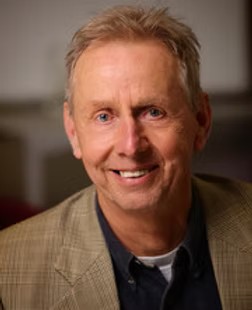
Frank Stilwell
President of the Evatt Foundation
April 2026